Discussions of lacustrine source and reservoir facies and extensional system trapping mechanisms are augmented by lectures and hands-on exercises using basin-scale and high-resolution seismic reflection data and sediment core data from rift lakes Malawi (Nyasa), Tanganyika, Edward, Turkana and Victoria.
The course is designed for Geoscientists, Petrophysicists, Reservoir Engineers, Well engineers, team leaders and managers. Ideally structured for groups working in multi-discipline teams, especially those engaged in reservoir and simulation modelling exercises.
Duration
Learning Level
What’s here?
Magmatically-active rift impacting segmentation, thermal regimes, and synrift fill Volcanics defining the thermal regime affecting source rock maturation.
Lacustrine mudrocks indicating potential source rocks (richness).
Modern rift-lakes illustrating extensional asymmetry, drainage evolution and spatial and stacking variability of syn-rift fills
Fluvio-deltaic sandstones and lacustrine carbonates are analogues for reservoir quality (poroperm) and architecture.
Rift segmentation and normal fault structures depict basin creation and trap formation.
Hot springs, fumaroles etc. for harnessing geothermal heat.
Rift Basin: Extensional tectonics forming grabens and half-grabens.
Sedimentary Fill: Organic-rich lacustrine source rocks, and fluvial, deltaic and sublacustrine fan reservoirs.
Structural Traps: growth faults, tilted fault blocks, and rollover anticlines.
Volcanism & Heat Flow: High geothermal gradients aiding maturation. Enhance fracturing. Also, key for harvesting geothermal energy.
Frontier Potential: Underexplored areas with high-risk/high-reward potential.
Proven Discoveries: South Lokichar (Kenya), Albertine Graben (Uganda), etc.
Rift-plays petroleum system:
Source: Organic-rich shales from deep lake environments.
Reservoir: Fluvial-deltaic sandstones, deep sublacustrine fans, or shallow lacustrine carbonates. Porous volcaniclastic or fractured basalts.
Seal: Fine-grained lacustrine mudstones.
Trap: tilted fault blocks, rollover anticlines, four-way closures in accommodation zones
Access
Road access. Dry riverbeds, short walks.
Logistics
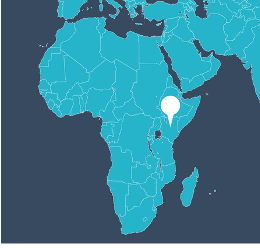
Kenya, fly in/out. Local transport by 4WD
Duration
5 days depending on content and whether attached to class-based sessions.
PhD
30+ years – geoscience
Chris is a sedimentary geologist focused on the geological records of modern lakes and ancient sedimentary basins, particularly in East Africa. His recent projects involve reconstructing climate change and basin evolution from drill cores in tropical African lakes, along with seismic imaging and stratigraphy of lacustrine basins. Professor at Syracuse University.
PhD
30+ years - geoscience
Mark develops and runs courses in the Open Air, Reservoir, E&P, Uncertainty & Risk and Energy Transition series for TRACS. He has a career background at Shell, AGR, TRACS and Langdale Geoscience. He has served as a distinguished lecturer for SPE and EAGE, acted as Training Director for TRACS and is an Associate Professor Heriot-Watt University. He is also co-author of the textbook ‘Reservoir Model Design’.
Global Head of Training
20+ years – geoscience
Global Head of Training (TRACS), and Expert to The European Commission on Horizon Europe 2020 research programme. Arndt develops and runs courses in the E&P Overview, Reservoir, and Open Air series. He is also a versatile geoscientist with 20 years of technical and managerial expertise in upstream oil & gas garnered on 3 continents and across different business environments and academia. He spearheaded global onshore and offshore exploration with focus on sub-Saharan Africa (East and West), S-Atlantic margins and Norway. Arndt has worked on carbonates and shallow to deepwater siliciclastics and assessed all aspects of petroleum systems, basin to prospect-scale, on datasets with disparate quality and in a variety of business environments.
PhD
20+ years – geoscience
Douglas develops and runs courses in the Reservoir and Open Air series. He has a career background at Conoco-Phillips, Chevron, BHP, Saudi Aramco and TectonKnow. Douglas has published over 60 scientific articles and papers and is an invited committee member, GCSSPEM Roberts meeting (2021); Invited member for AAPG International Research Committee (2017-present).