CCS projects have come of age as one of the tools to help meet targets set at the 2015 Paris Agreement. Company partnerships are generating project plans to these ends, but what constitutes a ‘good’ CCS proposal? What should be covered, and how should the modelling work be undertaken?
Anyone working in an asset team designing or evaluating the subsurface aspects of a CCS project: geoscientists, reservoir engineers, well engineers and team leads.
Duration
x5 sessions
Learning Level
Skills
Knowledge
Awareness
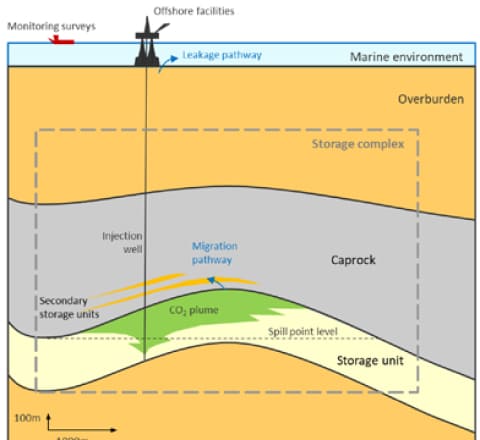
Whilst we can apply many of the skills associated with oil and gas development to CCS projects, the differences between production and storage projects are becoming clearer. The starting assumption for many people was that oil and gas fields at the end of their life would be logical places to store the sequestered CO2 gas. This is not necessarily the case. Optimal project design draws on considerations of the geomechanics of the entire ‘storage complex’ around the target reservoir, the effects of multiphase flow under unfavourable mobility ratios, and the re-use and integrity of ageing infrastructure, which calls for representative modelling and monitoring of the system in timespans extending beyond a typical production lifecycle. This short, modular course brings together domain experts in their respective fields to highlight areas for evaluation and modelling as part of any proposed CCS project.
Course Content
There are few active CCS projects globally, industry experience is limited and many topics are still subjects of active research. As a result, no single person can claim omniscience in all fields of CCS. Considerable domain expertise is available, however, and this course therefore aims to bring multiple
Module 1
Mark Bentley, Jerry Hadwin
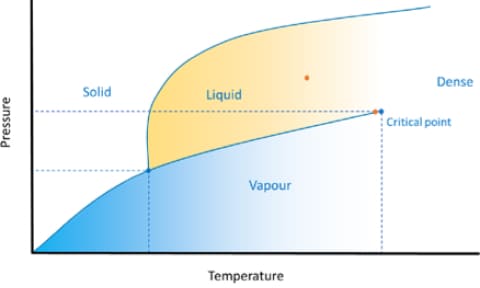
The view from asset practitioners: model scale and data sparsity, role of heterogeneity, multi-scale modelling, CO2 properties in the reservoir, storativity and storage efficiency.
Module 2
Florian Doster, Eric MacKay
Getting physics and chemistry right: pressure and plume evolution, simulation techniques, compositional behaviour, reactive transport, dissolution and mineralisation.
Module 3
Geomechanics: stresses and rock properties, 1D and 3D modelling techniques, seal breach, fault leakage, uplift & tilting.
Module 4
Steve Jewell
Wells: well types for a CCS project, well design, re-purposing existing wells, well integrity and decommissioning.
Module 5
Steve Jewell, Colin Macbeth, Mark Bentley
Monitoring wells, monitoring the storage complex using 4D seismic, summary of issues to consider and capturing the resulting uncertainty.
Mark develops and runs courses in the Open Air, Reservoir, E&P, Uncertainty & Risk and Energy Transition series for TRACS. He has a career background at Shell, AGR, TRACS and Langdale Geoscience. He has served as a distinguished lecturer for SPE and EAGE, acted as Training Director for TRACS and is an Associate Professor Heriot-Watt University. He is also co-author of the textbook ‘Reservoir Model Design’.
Jerry Hadwin
BSc, MEng 35+ years - reservoir engineering
Jerry mainly tutors courses in the Reservoir, Early Development, and Open Air Series. He has a career background at Shell, TRACS and AGR. Jerry is co-author of ‘Adventure Trekking in Oman’.
Steve Jewell
CEng, FIMMM, BEng 35+ years petroleum engineering
Steve develops and runs courses in the Wells and Reservoir Series. He has a career background with Conoco, Amerada Hess, Xodus, Well Decom, TRACS. Steve is co-author of ‘CO2 Storage Liabilities in the North Sea, An Assessment of Risks and Financial Consequences (DECC)’
Eric MacKay
PhD
30+ years – geoscience
Eric is a course tutor for the Reservoir series. He has a career background at Edinburgh University, Heriot-Watt University, and TRACS. Eric is a Professor at Heriot-Watt University, SPE Distinguished Lecture, and Scottish Carbon Capture and Storage Director. He is editor of numerous technical journals and author of over 100 publications.
Colin Macbeth
Professor, Geophysics
Heriot-Watt
Florian Doster
PhD
15+ years – geoenergy
Florian is a course tutor in the Reservoir (Reservoir dynamics, engineering & simulation; geological carbon storage) series. He has a career background at the University of Stuttgart, University of Bergen, Princeton University and Heriot-Watt University. Florian is Professor, Leader MuPhi Research Group, Director of Postgraduate Research Studies, Geoenergy theme lead of iNetZ+, Heriot-Watt University. He is the author of over 50 technical articles and papers.


 Energy transition and renewables
 Early development
 E&P overview
 Reservoir
 Wells
Wells Business
 Open air
 Uncertainty and Risk
 e-Products