The course is designed for Geoscientists, Petrophysicists, Reservoir Engineers and Well Engineers. Ideally structured for groups working in multi-discipline asset-based teams.
Duration
3-5 days depending on content required. One day travel in UK-Barcelona, one day-return.
Learning Level
Skills
Knowledge
Awareness
Course Content
What’s here?
Deepwater turbidite channels, levee deposits and mass transport complexes of the Ainsa and Jaca basins (including core data).
Two regional scale fluvial systems 1) Eocene axial, thrust sheettop fluvial system; 2) Oligo-Miocene transverse fluvial system feeding into the Ebro foreland basin.
Tidally influenced sandstone bodies (Roda Sandstone) of the Tremp-Graus Basin.
Geological Theme and Course Content The region offers the ability to focus on a number of technical themes including:
The analysis and interpretation of the sedimentology, stratigraphic
architecture and reservoir potential of alluvial fan, fluvial, tidal- and
wave-dominated shorelines/shelves, and deepwater deposits.
The interpretation of a range of deepwater sandstone bodies from
slope canyons, through basin floor channels to basin plain.
The analysis of regional scale sediment
transport paths in terms of their reservoir
potential, the controls that determine
length scales of down-dip changes along the
transport paths, and predictions that can
be made in terms of reservoir presence and
characteristics.
The relation between the spatial distribution of
reservoir potential to the structural geometry
of tectonically active basins in an exploration
sense.
The differences between fluvial, shallow
marine and deep marine depositional systems
from a modelling perspective.
The evaluation of the use of outcrop analogue
data for building better reservoir models
and understanding reservoir zonation
from a geological (rather than engineering)
perspective (supported by outcrop-based
models for development planning scenarios).
Access
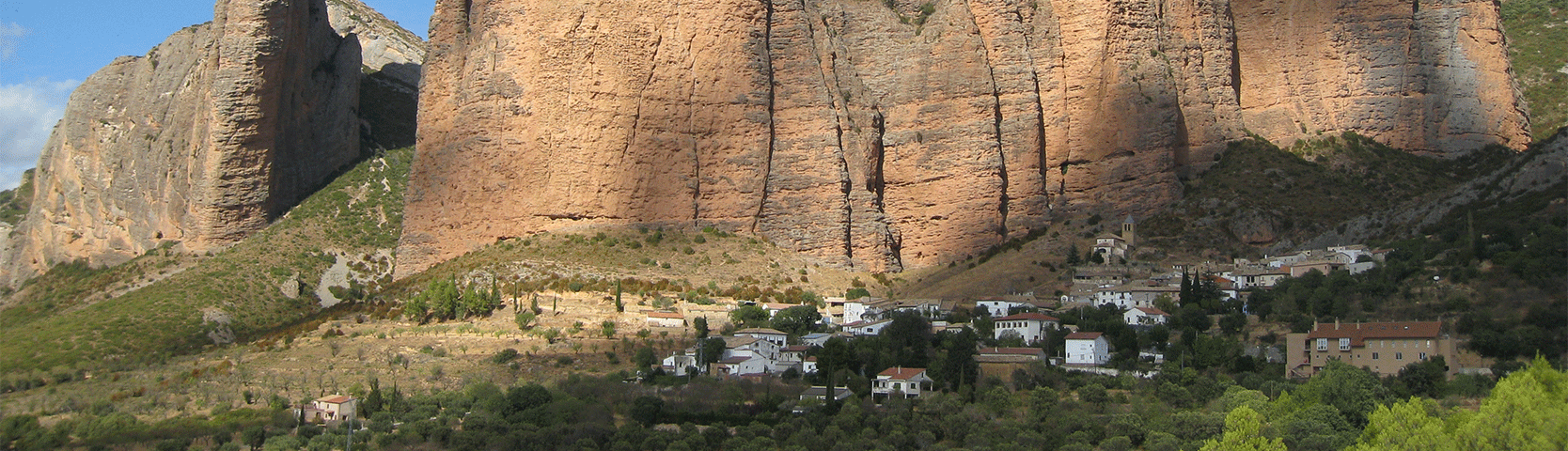
Fieldwork is carried out in the foothills of the southern Pyrenees and on the Huesca Plain. Outcrops are partly road-side, in addition to quarries and hillside view-points. Access is by coach with short walks of up to 2 km over scrubby ground and rocky terrain can be expected. Participants should be aware that some localities are at an altitude of around 1000 m (3000 ft) and field temperatures may exceed 25 degrees celsius.
Logistics
Pyrenees, Spain: fly in/out Barcelona. Accommodation in Tremp, Ainsa and Ayerbe depending on outcrops to be visited.
Mark develops and runs courses in the Open Air, Reservoir, E&P, Uncertainty & Risk and Energy Transition series for TRACS. He has a career background at Shell, AGR, TRACS and Langdale Geoscience. He has served as a distinguished lecturer for SPE and EAGE, acted as Training Director for TRACS and is an Associate Professor Heriot-Watt University. He is also co-author of the textbook ‘Reservoir Model Design’.
John Howell
PhD 25+ years - geoscience
John tutors courses in the Reservoir and Open Air series. He has a career background at Gaps, University of Liverpool, University of Bergen, Rocksource ASA, and the University of Aberdeen. John has published over 120 scientific articles and edited five books.

 Energy transition and renewables
 Early development
 E&P overview
 Reservoir
 Wells
Wells Business
 Open air
 Uncertainty and Risk
 e-Products