Geoscientists, Petroleum Engineers and Well Engineers engaged in the development of reservoirs for oil and gas production. The course is intended for a cross-discipline audience and would ideally be attended by geoscience and engineering professionals working the same development team. Not a ‘geology field trip’.
Duration
5 days
Learning Level
Skills
Knowledge
Awareness
Many reservoirs are located on passive margins characterised by heterogeneous sand systems and highly variable reservoir properties. Development strategies will differ depending on the part of the system being targeted, but the architectural and reservoir quality variation is nevertheless systematic through the syn– to post-rift transition. With a knowledge of structural development and sedimentary source location, optimal development strategies can be planned, and this week’s course provides an opportunity to discuss and workshop this on a set of excellent on-scale analogue outcrops in Greece.
Course Content
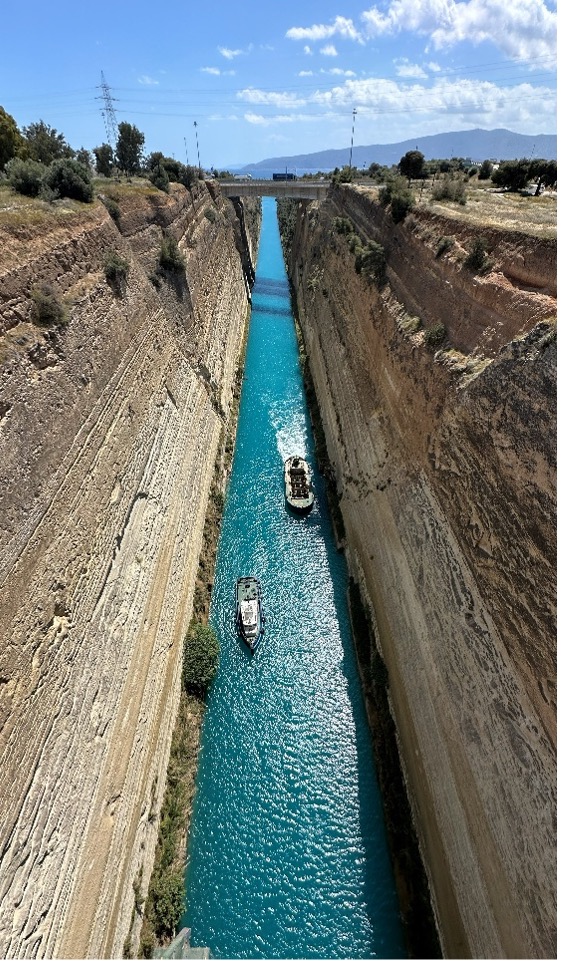
The outcrops around Corinth offer a ca100km excursion over an exposed rift basin that allows us to explore reservoir variation on the scale of a field development – a “3D seismic volume” in the field.
The structural framework of the rift provides the canvas on which we will paint the distribution of reservoir type and quality as these vary through the system. Through a consideration of changes in relative system confinement, we will aim to predict the location of the best reservoirs, describe the variation in likely recoveries from different part of the system and decide how a development strategy can be optimised depending on location and fluid fill.
Although a set of geological exposures, this is not primarily a ‘geology trip’, but rather a cross-discipline reservoir development workshop requiring inputs from geoscience, petrophysics, reservoir and well engineering.
Course Itinerary
Day 1 – 3D architecture of a rift basin on seismic scale – defining the container
Day 2 – Stratigraphic changes through the basin fill to the fluvial source area – where the best reservoirs lie
Day 3 – The shelf margin: Gilbert deltas and relay ramps; reservoir quality variation and differential sweep under production
Day 4 – Proximal to distal fill: petrophysical and architectural changes as confinement decreases into deeper water; reoptimising well design and completion strategies in contrasting parts of the system
Day 5 – Synthesis at the Temple of Apollo. Mapping out relative confinement and reservoir distribution across the structural container, identifying sweet spots for well targeting and choosing optimal completion strategies.
Access
Fieldwork is carried out in the Spring or Autumn for climate with outcrops short and flat walks from vehicles.
Logistics
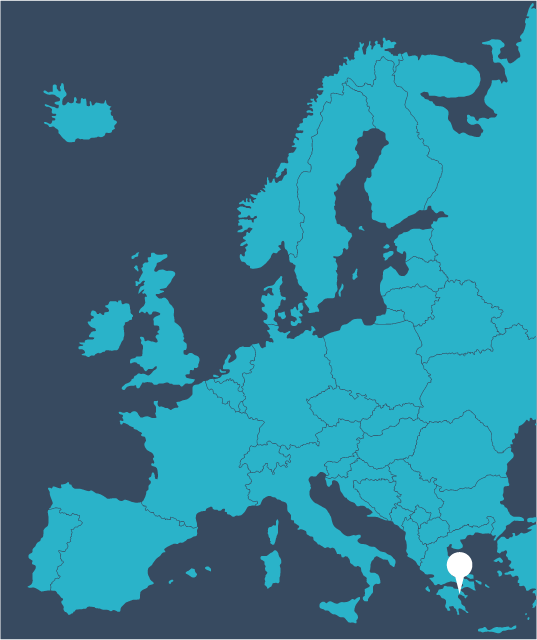
Corinth, Greece: fly in/out Athens. Accommodation in Loutraki, Diakopto with a final night in Athens.
Douglas develops and runs courses in the Reservoir and Open Air series. He has a career background at Conoco-Phillips, Chevron, BHP, Saudi Aramco and TectonKnow. Douglas has published over 60 scientific articles and papers and is an invited committee member, GCSSPEM Roberts meeting (2021); Invited member for AAPG International Research Committee (2017-present).
Mark Bentley
PhD 30+ years - geoscience
Mark develops and runs courses in the Open Air, Reservoir, E&P, Uncertainty & Risk and Energy Transition series for TRACS. He has a career background at Shell, AGR, TRACS and Langdale Geoscience. He has served as a distinguished lecturer for SPE and EAGE, acted as Training Director for TRACS and is an Associate Professor Heriot-Watt University. He is also co-author of the textbook ‘Reservoir Model Design’.
Maggie Hystad Murison
Training Manager 25+ years
As Training Manager, Maggie oversees the training programme and organises all open-air and classroom events, handling in-country logistics, tutor support, and HSE representation in the field. With a background in retail and extensive experience as an in-flight supervisor for KLM, her fluency in several languages, equip her well to support clients globally, and manage open air training events.


 Energy transition and renewables
 Early development
 E&P overview
 Reservoir
 Wells
Wells Business
 Open air
 Uncertainty and Risk
 e-Products