Have you been on reservoir engineering classes in the past, heard the terms, seen the equations but not used any of it directly yourself?Would you like someone to run over the basics and just pick out the essentials –the parts everyone really needs to know?
This one day Master Class is designed to explain how Reservoir Engineers make subsurface interpretations, use these to build models to make forecasts and use these in turn to influence significant investment decisions.
The course is designed for those who interface with reservoir engineering professionals and need to understand the language, techniques and assumptions they make in forecasting reservoir performance under various development schemes.
Duration
1 day
Learning Level
Skills
Knowledge
Awareness
The day will cover what types of models the reservoir engineer uses; from simple analytical (spreadsheet) tools to more complex numerical simulators, and will put in context the key fundamentals of rock and fluid properties, well performance and processing.The day will illustrate how these fundamentals and the commercial E&P context place constraints on forecasts, and whya significant associated range of uncertainty results.
This will be done in plain language accessible to those working outside reservoir engineering with the aim of giving you what you need to know to understand the subject – just the essential details.
Course Content
The day will cover six fundamental principles of reservoir engineering which everyone working with resource estimations and production forecasts should understand fully:
The influence of reservoir fluid properties on phase behaviour during production.
What well testing really tells us about the reservoir
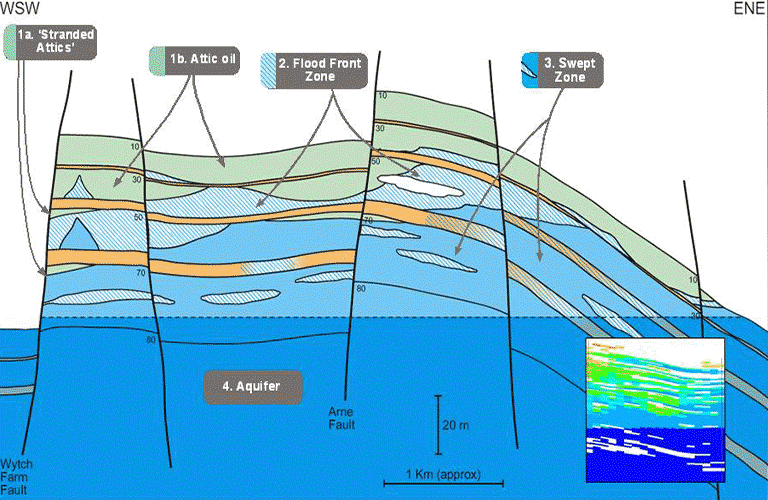
How reservoir fluids are displaced on a macroscopic and microscopic scale, ranging from the influence of reservoir architecture down to core plug scale heterogeneities
How to choose appropriately scaled models to select an optimal production mechanism for oil and gas fields
How to monitor reservoir performance and production forecasting and how this changes through the field life
How we manage uncertainty in reserves and resource booking, or in many cases fail to
Course Duration
1 day
Course Tutors
Mark Cook
BSc, MBA 40+ years - reservoir engineering, economics and risk analysis
Mark develops and runs courses in Early Development, Business & Risk and Reservoir Engineering series. He has a career background at Shell, TRACS (Director), and AGR (VP). Mark is Author of ‘Petroleum Economics and Risk Analysis’ and co-author of ‘Hydrocarbon Exploration and Production’, an SPE distinguished lecturer, and guest lecturer at Heriot-Watt University.


 Energy transition and renewables
 Early development
 E&P overview
 Reservoir
 Wells
Wells Business
 Open air
 Uncertainty and Risk
 e-Products